Anime: Ghost in the Shell Standalone Complex 2nd Gig

Ok so I finally got the second season on DVD on Friday.


Ghost In The Shell: Stand Alone Complex – Limited Edition Complete 2nd GIG (Play.com Exclusive Tin Box Set) (14 Discs)

And yep I watched it all over the weekend. Theres 26 episodes each one is approx 25 minutes long. I’d rate it as excellent

I began watching it with a bit of trepidation, I kind of conviced myself it wasnt going to be as good as the first stand alone complex. If anything this was better! Whilst the show doesnt require you to have seen the first season or either of the two movies, it definitly does help if you have. There are references to the laughing man incident which the the first season was based around. Also the second season doesnt really contain an explanation for what a Standalone Complex is. So heres my definition: Standalone Complex is a theoretical mental complex which is attributed to the mass cyberisation of the public. The first series explained how standlone complex was a term used to describe copies that have no original and this is realised through copycat crimes that dont appear to have an original criminal, in other words they are based on the actions of an imaginary criminal. The first series was based around The Laughing Man, a mysterious cyber terrorist who Section 9 ( our heroes ) must battle against. (ok this is a spoiler less review!)

The second season which is a completely different story sees Section 9 investigating a terrorist group calling themselves the Individual 11, who are battling to see an independent state formed for refugees being exploited around japan. Both series deal with the corruption of government and the manipulation of public opinion through the manipulation of the media. Ironically watching the series made me think about current events and ask how much of what we are told is actually the truth or how much has been “spun” by politicians who are persuing their own agenda. But hey thats the topic for a different day.

The animation quality is awesome, the action mind blowing, but most of all the social and technological and ethical issues the show touches upon are not only thought provoking but do you force you to re-evaluate your own beliefs. Some of the discussions between the characters can leave you bemused though I did wonder whether I needed a degree in Pyschology and Politics to be able to follow some of the dialogue, but nevertheless it makes you think.

I thoroughly recommend it. And if you cant fork out for the box sets then theres always the Ghost In the Shell movies.
What does Simplicity mean when it comes to software?

Our geek bookclub at Talis has been reading 37Signals Getting Real. It’s interesting text that contains for the most part a common sense advice with which we as a group can relate to. But one of the things thats been grating on my mind for a while now is the notion that simplicity sells, and by simplicity im referring to a lack of features. Unfortunatly whilst I was drafting this entry Joel got there first 😉 ( LiveWriter is excellent for offline editing of blog entries, unfortunatly it doesnt stop you getting pipped to the post!)

Anyway its well worth reading Joel’s post, I think hes absolutely right in pointing out that a lack of features isnt what made the iPod or BaseCamp such a success but the fact that amongst other attributes both these products were built to correspond to a user model that resulted in a high degree of usability. To my mind the problem we face in this industry is that in order to build useable systems we need to accept that we can only do that by understanding the users mental model, we can no longer afford to build software solutions as simply the delivery of a set of discrete requirements and leave usability as something we can bolt on at the end when we’ve got the rest of the system working. We have to understand our users and put them first.

Anime: Cyber City Oedo 808

Got back from the gym this evening and figured I’d tidy up. Was sorting through my collection of DVD’s and VHS tapes when I found this little gem:


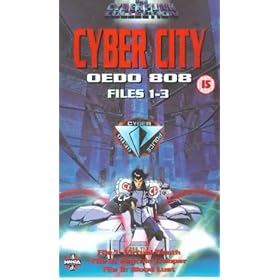
Cyber City Oedo 808

Can’t remember the last time I watched it, jeez it must have been at least 15 years ago! Anyway as i’m watching it now im suprised at how little its dated. The three part series amassed something of a cult following. It’s a Cyberpunk anime set in the year 2808. The basic plotline is that in the future in order to combat computerised crime the Police employ criminals with a history of violent and hi tech crimes. The twist is that these criminals all of have “Special Suspended Sentences” that carry prison sentences in excess of two or three hundred years. Each of these criminals receives a reduction in their prison sentence for each mission he completes successfully within a given period of time. If they fail to complete a mission an explosive collar fitted around their necks will explode and decapitate them.

There are three episodes, and each episode focuses on one of the three criminals: Sengoku, Benten and Go:Gol. The first episode Virtual Death, follows Sengoku as he must discover who has trapped 50,000 people in a a skyscraper only to discover that the man responsible is dead! The second episode Psychic Trooper pits Go:Gol against a military cyborg when its superiors decide to have it hunt him to prove its viability as a weapon. The final episode, Blood Lust, follows Benten as he investigates the murder of a geneticist and stumbles upon one deranged mans quest for immortality which has turned him into a modern day vampire.

The series is full of action, humour and cynism as you’d probably expect given that the heroes of this piece are criminals who have been forced to become police officers. It’s full of memorable one liners like “to err is human but to really f**k up you need a computer“.

The quality of the animation is excellent especially given that this was made before digital animation techniques became popular. The series was created by Yoshiaki Kawajiri who was also responsible for making a number of anime hits including Ninja Scroll, and one of my personal favourites Vampire Hunter D:Blood Lust, as well as being a key figure in the production of the Animatrix Project.

Anyway its been a bit of a blast from the past for me. Any of you anime nuts out there who like more contemporary stuff like the new Appleseed, Ghost in the Shell SAC etc. should really try to get a hold of this and check out one of the earlier works in this genre.

The maths behind Google’s page ranking

David Austin penned this article, which is currently being featured by The American Mathematical Society. The article details how Google’s PageRank algorithm works, which can be summarised as:

The fundamental idea put forth by PageRank’s creators, Sergey Brin and Lawrence Page, is this: the importance of a page is judged by the number of pages linking to it as well as their importance

The article is fascinating to read and Austin does an excellent job illustrating the workings of the algorithm using mathematical forumulae, diagrams and some examples.

Book Review: How to survive a robot uprising

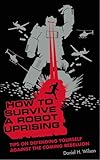
How to survive a robot uprising
How to survive a robot uprising: Tips on Defending Yourself Agains the Coming Rebellion
by Daniel H Wilson

This is easily one of the funniest books I’ve ever read! In a nutshell its a survival guide written by robotoscist Daniel H Wilson that aims to prepare the reader with a load of useful tips on how best to quash a robot mutiny. Wilson borrows from famous sci fi movies and then uses scientific fact to predict what robots might be like in the future. It’s a tongue in cheek vision of the future but also a legitimate introduction to contemporary robotics.

After reading the book I wanted to find out more about the author, and came across this video which is part of the Google Author Series. Daniel describes why he wrote the book and its also incredibly funny to watch and listen to.

I thoroughly recommend this book and if you have the time watch the google video you wont be disappointed.

Programmers are generally bad at user interface design?

Was intrigued when I read James O’ Coplien latest blog entry: The interface is the Program, and it ain’t Agile. Coplien discusses, quite correctly I believe, the fact that historically developers have tended to be very bad at building good user interfaces. Coplien discusses this in the context of Agile development groups and how usability is rarely captured as a story because stories in themselves are generally short-term goals that you want to achieve in the space of an iteration or even a sprint. Therefore because Agile teams are rapidly making changes to their application its hard to be able to do the focussed studies and analysis that is required in order to gain an understanding of how useable the application your building is. Fundementally programmers are not User Interface designers – Coplien attributes this to several reasons, which include the fact that university courses on software engineering have often done little more than pay lip service to HCI or User Interface Design, its often a topic that undergraduates are only ever given the most basic of introductions to.

I want to expand a little on what Coplien has covered so well …

I’ve been fortunate enough to have worked closely with Alan Dix and Russell Beale, the authors of Human Computer Interaction. I do class myself as a developer but I have had a strong interest in HCI, and user interface design and its an area I’ve been interested in and reading around for the best part of a decade. In that time I’ve often had to work in teams where its apparent that other developers dont either understand the need for HCI, or even how to begin to think about it.

In my own experience this comes from the fact that programmers tend to focus on the mechanics of building an interface, getting the right framework, and then designing around the limitations of the toolset they have picked. Invariably they tend to spend tonnes of time just focusing on getting the UI to work and this UI is designed from the perspective of satisfying the flows defined in requirements documents or design docs like Use Cases. You can contrast this with people trying to use the user interface, who dont care how it was built, or what the limitations in the underlying technologies were, these people just want something they can use. To me its this emphasis that seperates a working interface from a “good” user interface. Good User Interface are designed around the user, unfortunatly most user interfaces tend to be designed around building something that satisfies a series of discrete requirements.

I dont think it’s fair to simply say that programmers arent capable and can’t do good UI design, the truth is that on most software projects, and in most teams, it just isnt their emphasis.

In order to improve things developers need to be taught the importance of user interface design. Our development group at Talis is a great example of this. As a team we know we need get better at understanding how to build user interfaces. One of the activities we undertook recently was to get everyone to read Spolsky’s User Interface Design for Programmers as part of our geek book club. It’s an excellent text that introduces programmers to key concepts in user interface design.

However as more and more applications are being delivered over the web developers should take the time to read Jakob Nielsen’s seminal text Designing Web Usability – The practice of Simplicity. Bruce Tognazzini’s TOG on Interface, might be a little dated but its still an incredibly good text and has a great section on conceptual models.

Most importantly though: one of the things our group has realised is that User Interface Design and User Interaction Design are specialised skills, and whilst its important that developers should be encouraged to learn more about this area, its vitally important that organisations recruit people with these specialised skills into their teams. To that end Talis is openly recruiting for individuals who specialise in HCI/User Interface Design, so if you think you fit the bill and its an area your passionate about, and you’d like to work for an organisation that takes this very seriously then check out the job spec here and send your CV along with a covering letter to team.talent@talis.com.

Hashing, Searching and Sketching

We are doing a lot of work at Talis at the moment on refining the indexing and searching capabilities in our platform. To that end I’ve trying to get up to speed on subject; anyway I came across this fascinating tech talk over at google on using Hashing and Sketching to get improved search results. Its a little over an hour long, and does get very technical in parts but nonetheless it gives a really insight into the possible gains that can be achieved through locality sensitive hashing functions and sketching ( the compression of large complex objects into a few bytes and then comparing these representations to determine how similar objects are).

Robot Introspection: Self Modeling.

Josh Bongard, Victor Zykov and Hod Lipson over at Cornell University have been working on a very interesting research project developing a small robot that can create an “internal model” of itself and then use that model to generate successful motor patterns for movement, before and after damage.

This is based on the notion that higher order animals, like ourselves, have some form of an “internal model”, even though we dont necessarily think about it consciously, yet it helps us to plan complex action and understand their consequences. For example we know if we fall from a great height we could break our legs, if we put our hand through a flame it will burn ( and yes thats generally a bad thing! ) – more fundementally we know we have two arms, two legs, we know where they are in relation to each other and we understand how to use them, as well as what their limitations are.

The guys at Cornell have succeeded in demonstrating how a small long legged robot can synthesize a model of its own topology and then based on this model it can navigate around a small environment and in doing so synthesizes new behaviour before and after it has been damaged, Think of it in terms of a person who has to get from one side of a burning room to an exit on the other side and cant walk because his/her legs are damaged – most humans wont simply lay down and wait, we would crawl, or drag ourselves along.

Here’s a picture of the robot they have developed

Is it just me or does their robot look a hell of a lot like those replicators from Stargate SG1?

You learn more about this research at the projects homepage here.

Here’s a really cool video of the robot in action.

Here’s a link to to their latest publication on the project entitled “Resilient Machines Through Continuous Self-Modelling“, which is well worth reading.

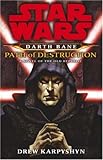
Book Review: Star Wars: Darth Bane – Path of Destruction

I guess should begin by saying this is the first Star Wars novel I’ve ever read. I remember being at Borders book store about a month ago browsing through their collection of Manga and Graphic novels. I remember thinking about having to find a new author to read since David Gemmell had tragically died a couple of weeks earlier he was an author who’s works I had been reading since I was about 13.

Darth Bane – Path of Destruction, by Drew Karpyshyn

Anyway during the course of my deliberations I remember glancing over at the shelf and seeing the cover to this novel and feeling intrigued … I read the cover and inlay to get a feel for what it was about … it seemed interesting … promising to recount the tale of the rise to power of the first dark lord, from his slave-like upbringing as a miner to the moment in which he changes the future of the Sith forever.

I have to admit I really enjoyed it. It was fun! It’s kind of cool to cheer for the bad guys every now and again. I guess for a long time, with series such as Star Wars and Star Trek, there’s been this condescending notion that everyone is pretty much polarised into either being good or being evil. I know that’s a gross generalisation but it does often feel like that, particularly in the clean cut universe of Star Wars. I guess what I liked about this novel was it didn’t try to treat the differences between the Sith and Jedi as a battle between good and evil. Rather it treated them as diametrically opposed philosophies, basically, about how to attain and use great power.

The story focuses on how a young miner, Dessel, is recruited into the Sith army as a foot soldier to help in the battle against the Jedi. His exploits in battle are noticed by his superiors who realise that he is unusually strong in his control of the force, but his power is latent and reveals itself at times of great stress or when he is in danger. They send him to a Sith academy where he is taught to master his powers, and in doing so transforms into Darth Bane. He realises that the Sith brotherhood has betrayed its own founding principles by trying to re-invent themselves and their structure as a mirror of the Jedi. On realising this Bane realises that the only way to ensure the future of the Sith is by destroying the Sith Brotherhood competely and then re-creating it based on the founding principle of the true Sith… the Rule of Two, “two there shall be. no more, no less; One to embody the power and the other to crave it”.

I wont reveal any more of the story, but what I will say is that it is a well written and fast paced story that surprisingly engrossing. I hope the author, Drew Karpyshyn, does follow this novel up with a sequel. Bane is a very well realised character and even though you know he represents the very “evil” that everyone who is good is “supposed” to oppose, you cant help but think that like all of us he is the sum of his experiences and the pain he endured. I guess theres a little of Bane in each of us and perhaps that’s why were drawn to him.